If you’ve ever walked into your living room and felt like you’re drowning in a sea of bright plastic and loud, flashing lights, you aren’t alone. As parents, we want the best for our little ones, but the “toy mountain” can feel more like a distraction than a help.That is exactly why so many Australian families are turning to the Montessori method. It isn’t just a trend; it is a way of looking at our children as capable, independent little humans who thrive when they have the right tools to explore the world.
What is Montessori and Why Does it Work?
At its heart, Montessori is about purposeful play. Instead of a toy that “does the work” for the child (by making noise or moving on its own), Montessori toys require the child to engage. They are designed to isolate one skill at a time—like grasping, sorting, or problem-solving—so your child can focus deeply without being overstimulated.When you’re looking for Montessori-aligned gear in Australia, keep an eye out for:
Natural Materials: Wood, cotton, and metal provide a better sensory experience than plastic.
Simplicity: Does it have a clear purpose? (e.g., putting a ball in a hole).
Real-World Logic: Is it something they see in their daily life?
Here are three specific essentials that I’ve found to be absolute game-changers for early development.
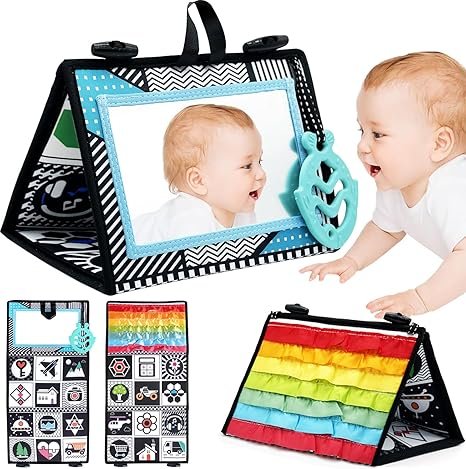
1.First Sensory Growth: High Contrast Activity Mats
In those first few months, your baby’s world is a blur. They are hardwired to look for high-contrast patterns because that is what their developing eyes can see best.I always recommend a High Contrast Baby Activity Mat for the nursery. It provides a calm, dedicated space for tummy time where they can actually focus. Watching a newborn track those black-and-white shapes is incredible—it’s the first step in building their visual tracking skills and concentration.
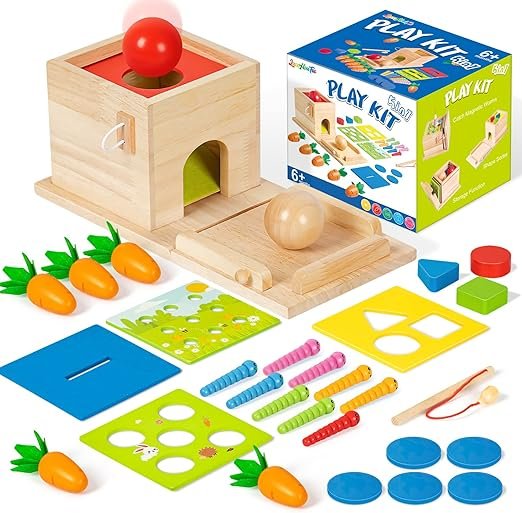
2.The “Aha!” Moment: The Object Permanence Box
Around 6 to 12 months, babies start to realise that when you hide a toy, it hasn’t actually vanished. This is a huge cognitive leap!The Wooden Montessori Object Permanence Box is the perfect tool for this stage. It’s so simple: they drop the ball, it “disappears,” and then it rolls back out. It builds hand-eye coordination and that vital sense of cause-and-effect without any overstimulating lights or sounds.
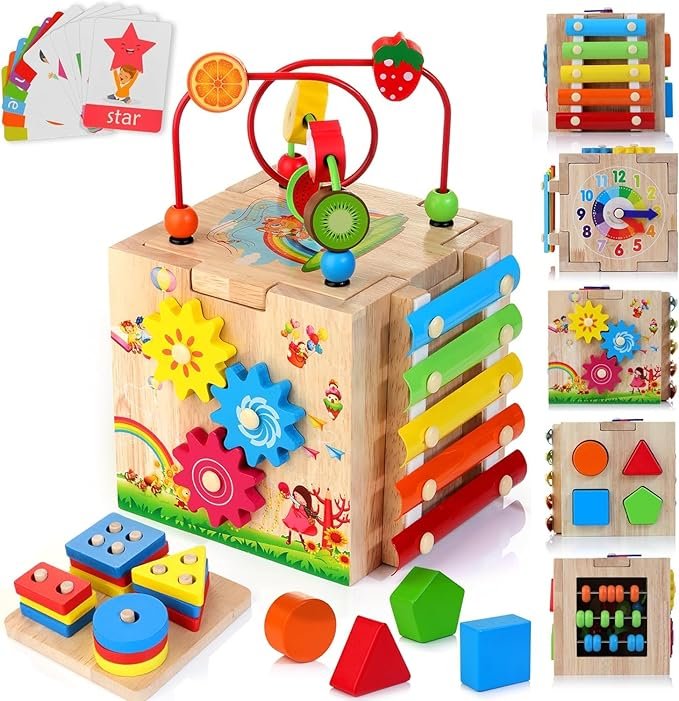
3.The Toddler “Workhorse”: 8-in-1 Activity Cube
Once they start sitting up and exploring, you want something that offers variety without the clutter. A solid wooden cube is often the centerpiece of a Montessori-inspired playroom.I love the Hellowood Wooden Activity Cubebecause it grows with them. From the bead maze for tiny fingers to the shape sorter for older toddlers, it hits all those fine motor skill milestones. Plus, it’s made of solid wood, so it can handle the “enthusiastic” play of an Aussie toddler!
Final Thoughts for Aussie Parents
Creating a Montessori home doesn’t mean you have to throw away every plastic toy you own. It’s about being intentional. By choosing a few high-quality, wooden pieces that challenge your child’s mind, you’re creating a calmer environment where they can truly flourish.